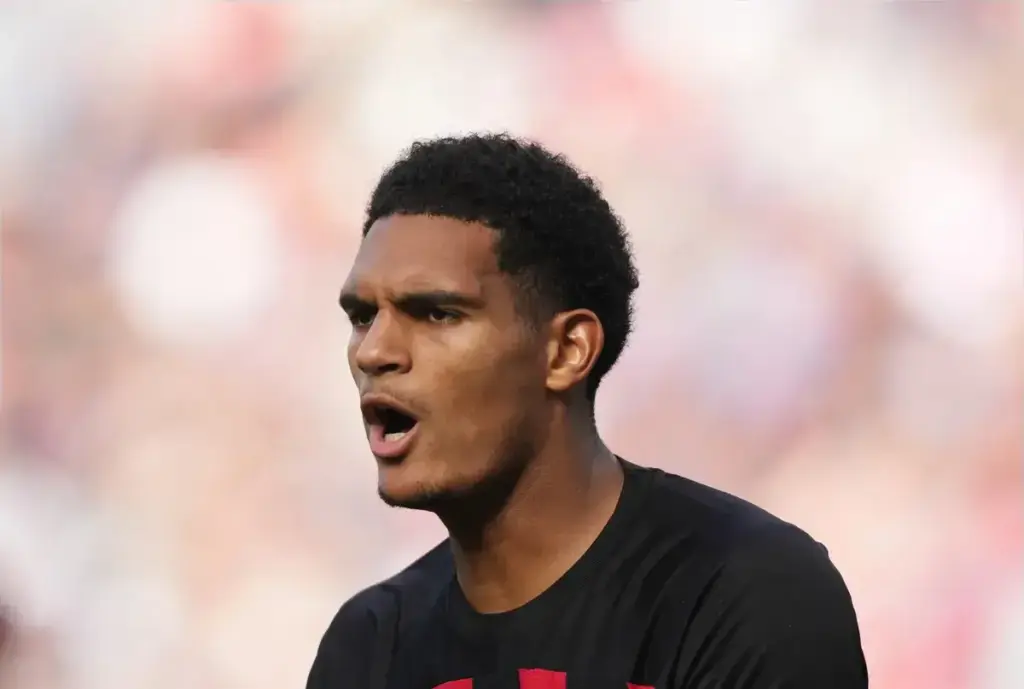

Key takeaways
- Josh Acheampong has started two of Chelsea’s opening five Premier League matches.
- Xabi Alonso has already praised his versatility and ability on the ball.
- Chelsea’s recruitment should address a clear defensive need while preserving meaningful opportunities for their academy graduate.
Chelsea and Xabi Alonso face an important question over Josh Acheampong before any January defensive signing: which position are they developing him to play?
The 20-year-old helped England Under-21s secure European Championship qualification on Friday. Meanwhile, Chelsea’s reported interest in another centre-back brings his club opportunities into sharper focus.
Our coverage of the reported enquiry for Bayer Leverkusen defender Jarell Quansah concerns an initial approach attributed to Bild. There is no agreement, and it would be premature to describe any transfer as inevitable.
Even so, the recruitment question deserves scrutiny. Before adding another defender, Chelsea should establish whether Acheampong can fill the role they are looking to strengthen.
Josh Acheampong’s Chelsea minutes need context
According to Opta’s season statistics, Acheampong has made four Premier League appearances, including two starts, across Chelsea’s opening five fixtures.
| Premier League measure | Acheampong in 2026/27 |
|---|---|
| Appearances | 4 |
| Starts | 2 |
| Minutes | 221 |
Those figures show genuine involvement. Starting two of five matches hardly supports a claim that Alonso has shut him out.
They also leave plenty unresolved. A small collection of starts and substitute appearances cannot establish his long-term place in the defence, particularly when his responsibilities change.
His England progress strengthens the case for continued opportunities. As covered in our report on England’s Euro 2027 qualification, Acheampong completed the goalless draw against Slovakia.
That is valuable competitive football. It does not automatically settle whether he should start at centre-back for Chelsea, where the opposition, partnerships and demands will differ.
The useful next step is to build a clearer picture of his club role.
Alonso’s own assessment offers a starting point
Speaking before the Brighton match earlier this season, Alonso explained what impressed him about Acheampong:
“he can play in different positions, he’s good with the ball, and he understands his role.”
That assessment matters because it identifies qualities the manager already values. Chelsea have a defender capable of contributing to more than one selection problem.
Versatility can help a young player get into the side. It can also make his development harder to assess if every appearance involves a different assignment.
Chelsea’s official report from the Arsenal defeat placed Acheampong at right-back, with Maxence Lacroix and Wesley Fofana in central defence.
That distinction should shape the January discussion. Minutes at right-back provide senior experience, but they do not answer every question about his readiness to become a regular central defender.
At full-back, a player can face repeated decisions about engaging a winger, tracking an overlapping runner and protecting the outside channel. Centrally, organising distances with a partner and defending the space around the striker become more prominent.
Chelsea need to judge Acheampong against the job they actually want him to perform.
Why the Brentford cameo offers limited evidence
His most recent league appearance also illustrates why minutes need context.
The official Brentford match report records Acheampong replacing Fofana after 71 minutes. Chelsea were already behind and chasing an equaliser.
Brentford scored twice more before full-time.
That sequence alone cannot establish individual responsibility. Equally, arriving during a difficult match does not remove a defender’s responsibility to make sound decisions.
It does mean that a late appearance in an increasingly open game offers a different test from starting within a settled defensive unit.
For recruitment purposes, Chelsea need more than the final score and an appearance total. They need to assess his positioning, decisions under pressure and understanding with the players around him.
A defined run of opportunities, earned through training and performance, would make that assessment more useful.
Any January signing must improve a specific role
There is a sound argument for signing a defender who clearly improves Chelsea’s strongest available team. Acheampong’s academy background should not prevent that.
But another player competing for occasional starts would require a different justification.
The club would need to explain internally which weakness the signing addresses, where the newcomer sits in Alonso’s preferred structure and how the remaining opportunities would be distributed.
That is especially relevant when assessing a versatile player. A new centre-back might reduce Acheampong’s central opportunities while leaving him involved at right-back. His overall appearance count could remain respectable even as his development in one position slows.
Chelsea should decide deliberately whether that is the right route for him.
Bournemouth begins the next stage of the assessment
Chelsea return to Premier League action against Bournemouth on 10 October. Acheampong does not need a guaranteed starting place, but the weeks before January should help establish what earning one requires.
Alonso has already identified qualities worth developing. The next task is to connect that assessment with a clear role and meaningful chances to perform it.
If Chelsea eventually sign Quansah or another centre-back, they should do so with a firm understanding of what the newcomer adds.
Giving Acheampong a fair, clearly defined assessment first would make that decision better informed.







Comments.
Loading comments…